Ad Space (728x90)
What Is BMI, Really?
Body Mass Index (BMI) is a simple calculation that estimates whether your weight falls into a healthy range for your height. It's calculated by dividing your weight in kilograms by your height in meters squared (kg/m²), or in imperial units, weight in pounds divided by height in inches squared, multiplied by 703.
Doctors and researchers started using BMI decades ago because it's fast, free, and doesn't require any special equipment — just a scale and a measuring tape. That's exactly why it's still used today, from routine doctor visits to large-scale public health studies.
The Standard BMI Categories
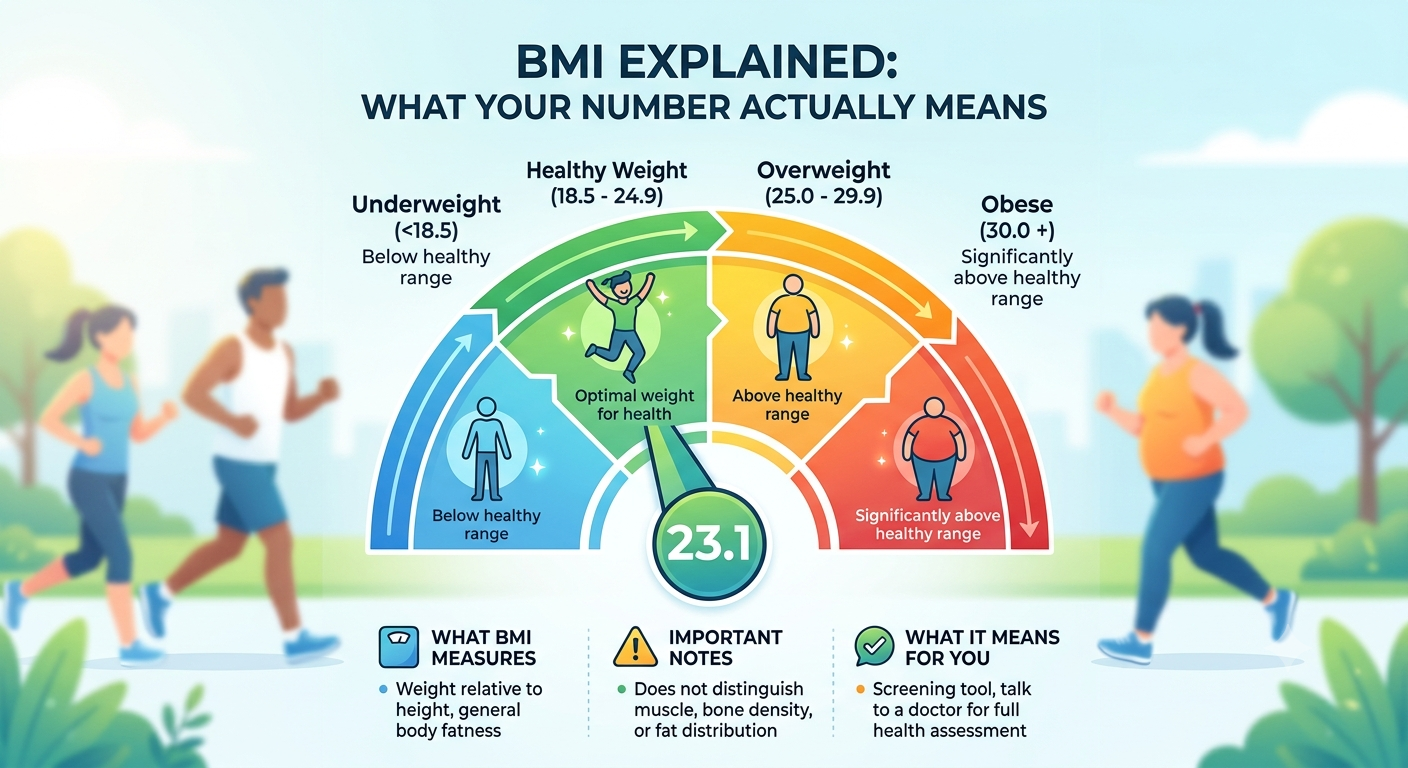
Most health organizations use the following ranges for adults:
- **Below 18.5** — Underweight
- **18.5 to 24.9** — Normal weight
- **25.0 to 29.9** — Overweight
- **30.0 and above** — Obese
These categories aren't a diagnosis on their own — they're a starting point for a broader conversation about health, usually alongside other measurements and your doctor's assessment.
Why BMI Isn't the Full Picture
BMI has one well-known limitation: it can't tell the difference between muscle and fat. Because muscle is denser than fat, a very muscular person — an athlete, a bodybuilder, someone who lifts weights regularly — can have a BMI that reads as "overweight" or even "obese," despite having very low body fat.
The opposite can also happen. Someone with a "normal" BMI might still carry a higher percentage of body fat than is ideal, particularly if they have low muscle mass. This is sometimes called being "skinny fat."
BMI also doesn't account for where fat is stored on the body. Fat carried around the abdomen is more strongly linked to health risks like heart disease and type 2 diabetes than fat carried elsewhere — but two people with the same BMI can have very different fat distribution.
Age, sex, and ethnicity can also shift how meaningful a given BMI number is. Older adults naturally carry a different muscle-to-fat ratio than younger adults at the same BMI, and some research suggests certain population groups may face health risks at somewhat different BMI thresholds than the standard ranges reflect.
So Should You Still Use BMI?
BMI remains a genuinely useful starting point — it's quick, consistent, and correlates reasonably well with health risk across large populations. The key is treating it as one data point, not the whole story.
For a fuller picture of your health, BMI works best alongside:
- **Body fat percentage** — tells you how much of your weight is actually fat versus lean mass
- **Waist circumference** — a simple indicator of abdominal fat, which carries more health risk
- **Ideal weight range** — accounts for your frame and height more specifically than BMI alone
Calculate Your BMI
Curious where you land?Use our free [BMI Calculator] to get your number instantly, along with your health risk category.
If you want a fuller picture beyond BMI alone, try our [Body Fat Percentage Calculator] or check your [Ideal Weight Range] based on your height and frame.
BMI is a useful, quick screening tool — not a complete health verdict. If your number surprises you, or sits outside the "normal" range, the best next step isn't to panic over a single figure, but to look at the fuller picture: body composition, waist measurement, lifestyle, and a conversation with a healthcare provider if you have concerns. Numbers are a starting point for questions, not a final answer.
Ad Space (728x90)